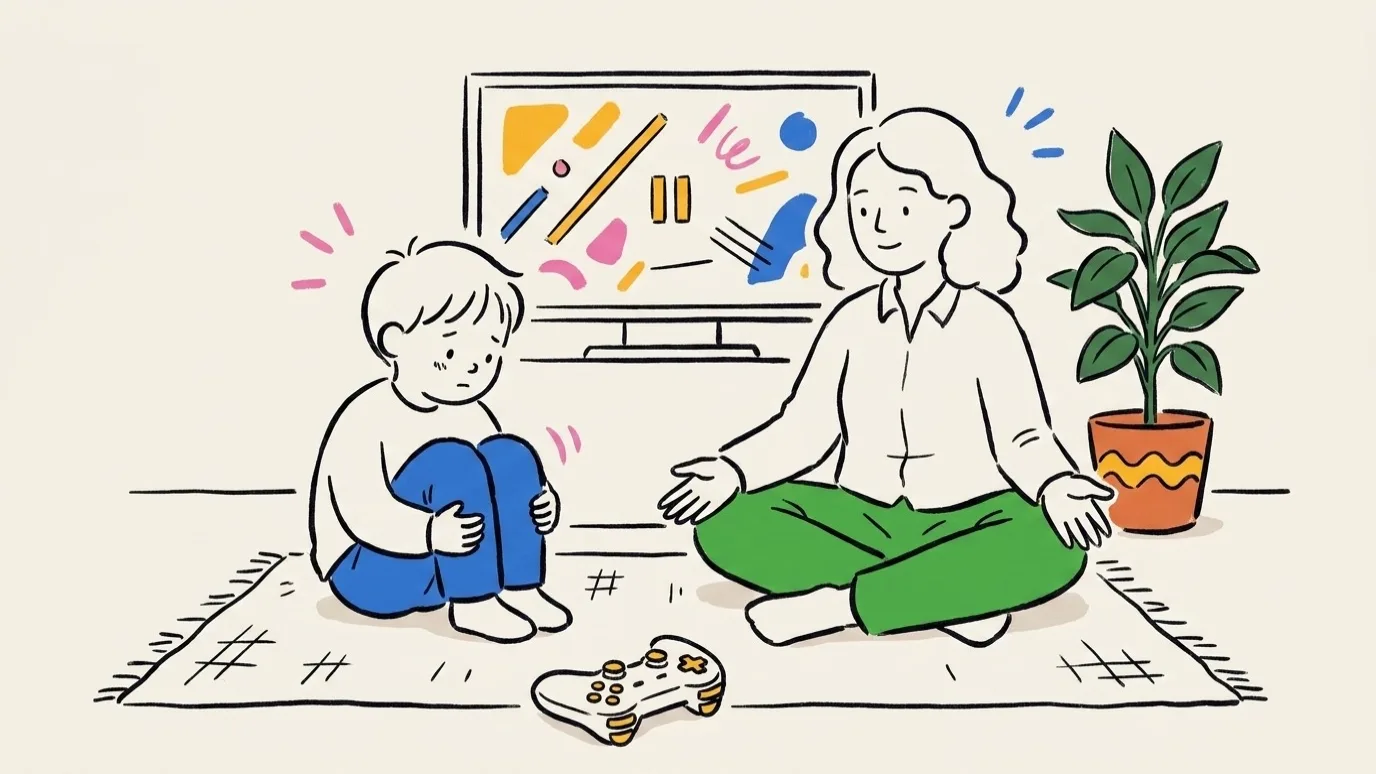
Frustration Quits: What to Say When Your Kid Throws the Controller
From thrown controller to quiet repair talk, this script helps you navigate frustration quits in a way that builds emotional intelligence and keeps games fun.
The Setup
A thrown controller is a signal, and the signal is “this got harder than I can handle right now.” This script gives you the words for the thirty seconds after a frustration quit, so the game stays fun and your kid learns something about their own limits. Gaming frustration is real: modern games are designed to push players right up against their limits—tight timing windows, tricky puzzles, relentless enemies. That’s part of what makes them such powerful growth-mindset tools: kids get a rapid-fire loop of try → fail → adjust → try again.
But there’s a difference between good frustration (“Ugh, that boss is so hard… okay, one more try”) and red-zone frustration (controller slam, tears, “I’m the worst, I’m never playing again”). Red-zone moments are a sign that your child’s nervous system is overwhelmed, not that they’re “overreacting” or “too sensitive.”
Under the hood, their emotion-regulation systems are still under construction. Intense disappointment, embarrassment, or shame can flood their body faster than their brain knows how to handle. In Coplay terms: the difficulty dial on the game might be two clicks higher than their current emotional skill level, even if their thumbs can keep up mechanically.
This conversation is about treating frustration quits as practice reps for emotional regulation, not moral failures to punish. You’re helping your child:
- Feel and name big emotions without shame
- Decide what to do after the feeling (try again, take a break, or change the plan)
- Right-size the challenge so the game stays “hard but doable,” not “hard and hopeless”
Zooming out, this is where our Skill Development Paths and Game Library come in handy, like this excerpt from our Spatial Awareness guide:
🔓
Members get the words that work
The full script — what to say, what to skip, and why it lands (5 tips · ~1850 words) — plus every other script in the vault, for the next tricky moment.
Become a member